
The rainy season has arrived once again, bringing unpredictable weather. Weather monitoring no longer requires cumbersome equipment—a single highly integrated instrument does the job! Dingxin Smart Technology's independently developed Micro-Meteorological Monitoring Device breaks through traditional monitoring limitations. Its innovative design adapts to diverse scenarios, providing precise and efficient meteorological data support for various industries, making it the preferred choice for outdoor weather monitoring. Unlike traditional modular monitoring systems, this eight-parameter micro-meteorological station achieves highly integrated innovation. It consolidates eight standard meteorological parameters—ambient temperature, relative humidity, wind speed, wind direction, atmospheric pressure, precipitation, PM2.5, and PM10—into a compact structure. This eliminates the need for multiple devices, significantly reducing deployment costs and space requirements.
The device supports 24/7 continuous outdoor online monitoring. Through its digital communication interface, it can output all monitoring parameters at once, enabling efficient and convenient data transmission. It also features flexible scalability, allowing for the addition of AQI parameters such as carbon monoxide and nitrogen dioxide to accommodate more complex environmental monitoring scenarios. With its outstanding functional advantages, the instrument finds extensive application across diverse fields. These include urban grid-based environmental monitoring, smart streetlight integration, scenic area environmental management, agricultural meteorological monitoring, hydrological and meteorological early warning systems, power plant environmental protection, and highway meteorological monitoring. It comprehensively meets the monitoring needs for various meteorological parameters.

As a crucial technical instrument in meteorological detection, micro-meteorological monitoring devices have become an indispensable component of modern meteorological monitoring systems due to their high-precision detection capabilities for weak precipitation phenomena. This paper systematically analyzes the technical principles, global market status, technological development trajectory, major manufacturer landscape, and application characteristics of micro-rain radars based on real-world data and literature from both domestic and international sources. The findings reveal that micro-rain radar technology has evolved from basic detection to intelligent and networked stages, with distinct technical pathways and application models emerging across different countries and regions. By comparing the performance parameters, application cases, and industrial policies of micro-rain radar equipment worldwide, this study highlights the current developmental disparities and complementary nature of global micro-rain radar technologies. This study provides comprehensive technical references and market insights for researchers and industry decision-makers in meteorological equipment technology, holding significant theoretical value and practical significance for advancing innovation and development in meteorological detection technologies.
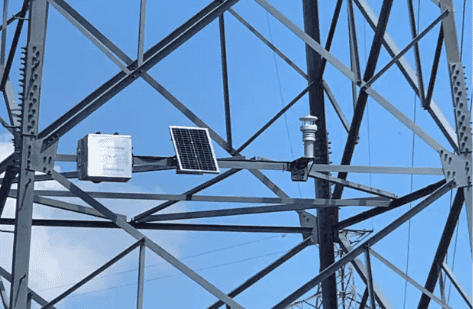
Micro-meteorological monitoring systems typically consist of core components such as antenna units, radio frequency modules, signal processors, and data acquisition systems. Antenna units commonly employ parabolic or phased array antennas for transmitting and receiving millimeter-wave signals. Radio frequency modules generate transmission signals while amplifying and down-converting received signals. Signal processors perform digital signal processing and Doppler spectrum calculations. Data acquisition systems handle storage and transmission of meteorological products derived from inversion. Modern micro-rain radars also integrate multiple sensors, such as temperature, humidity, and barometric pressure sensors, to provide supplementary meteorological data and enhance inversion accuracy.
The operational modes of micro-meteorological monitoring devices primarily include continuous observation mode and intermittent observation mode. In continuous observation mode, the radar operates continuously, providing precipitation monitoring data with high temporal resolution. Intermittent observation mode, on the other hand, conducts observations according to a preset schedule or external trigger conditions, making it suitable for energy-constrained applications. Some advanced micro-rain radars also support scanning observation mode. By altering the beam steering angle, they capture three-dimensional precipitation structures within a finite range, thereby expanding their application scope.
The data processing workflow for the micro-meteorological monitoring device includes steps such as signal preprocessing, spectral moment calculation, and physical parameter inversion. Signal preprocessing primarily aims to suppress noise and interference, enhancing the signal-to-noise ratio. Spectral moment calculation involves estimating moment parameters of the Doppler velocity spectrum, such as power and velocity spectral width. Physical parameter inversion involves establishing a relationship model between radar observations and physical precipitation quantities to derive the required precipitation parameters. Modern micro-rain radars widely adopt intelligent inversion algorithms, such as neural networks and machine learning, to further improve inversion accuracy and reliability.