
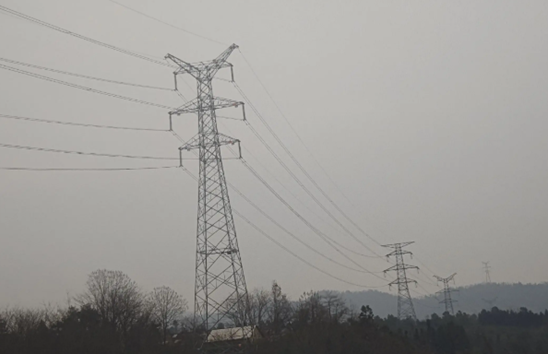
Convective weather is also a type of microclimate. So, how significant is its impact on the power grid? Although microclimates are localized weather phenomena, they can be extremely destructive to power facilities. In particular, the short-term heavy rainfall, thunderstorms, and strong winds caused by convective weather pose multiple critical threats to core power facilities—such as transmission lines and substations—and compromise the safe and stable operation of the power grid.
Short-term heavy rainfall caused by convective weather can easily trigger landslides and mudslides, which can wash away the foundations of utility poles and towers, causing them to tilt or collapse. At the same time, rainwater soaking cable terminals and junction boxes can reduce insulation performance, leading to short circuits and leakage faults. Thunderstorms, on the other hand, can produce intense lightning strikes that hit transmission lines or substation equipment, damaging critical components such as insulators and transformers, triggering line trips, and causing regional power outages.
In addition, the sudden strong winds associated with convective weather can cause power lines to sway violently and collide with one another, wearing down the insulation and even snapping the wires; they may also pick up foreign objects that become entangled in the lines, causing short circuits. Such micro-meteorological phenomena are sudden and difficult to predict, often causing equipment damage within a short period of time. This not only increases the difficulty and cost of operations, maintenance, and emergency repairs but also disrupts residents’ daily lives and business operations; in severe cases, it can even affect essential public services, posing a major challenge for power system operations and maintenance.
Faced with this challenge, the Power Transmission Line Micro-meteorological Zone Monitoring Device DX-WPS100-QX, developed by Dingxin Smart Technology, offers a solution. The device primarily consists of monitoring units installed on transmission line towers, which comprehensively monitor seven environmental parameters (subject to adjustment)—including ambient temperature, humidity, wind speed, wind direction, rainfall, atmospheric pressure, and solar radiation. After sensors collect the data, it is processed to filter out interference factors and then uploaded to the monitoring center for storage, analysis, and processing, enabling power authorities to promptly access meteorological data from the line’s micro-meteorological zones.
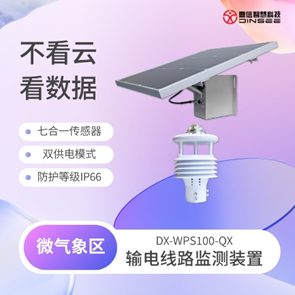
1. Multiple data collection methods for flexibility and efficiency: The device supports both automatic and controlled data collection modes. It can automatically collect and transmit meteorological parameters at preset intervals; the minimum data collection interval can be set to 3 minutes. By default, meteorological data is transmitted at the top of every hour. This flexible data collection approach not only meets real-time monitoring needs but also conserves data transmission resources.
2. Data Preprocessing to Ensure Accuracy: The device is equipped with data validity checking and analysis capabilities that preprocess the collected data, automatically identifying and filtering out erroneous data. Additionally, it performs calculations on the raw data to generate metrics that reflect the characteristics of various meteorological parameters, ensuring that the data uploaded to the monitoring center is accurate and reliable, and providing a solid basis for power utilities to formulate response measures.
3. Rich in features to meet diverse needs: The device also offers a variety of functions, including power supply voltage monitoring, cyclic storage of meteorological data for over 90 days, compliance with communication protocols of the China Southern Power Grid and State Grid, dynamic response to remote commands, remote parameter modification, password authentication, remote firmware updates, and short-range wireless debugging. It meets the operational needs of the power sector across various scenarios, enhancing the efficiency and reliability of power operation and maintenance.