Distribution Network Cable Fault Early Warning and Location Device, Suitable for distribution network cable transmission lines at voltage levels of 35 kV and below, this device is installed in prefabricated substations, ring main units, and switching stations to provide early warning of anomalies and locate faults in distribution network cables.
The device can capture traveling wave signals for secondary-side current and voltage, while reserving some channels for conventional traveling wave sensor signals. The device uses traveling wave sensor hardware to extract traveling wave fronts. The traveling wave substation stores the captured traveling wave signals, stamps them with timestamps, and then uploads them to the traveling wave master station via relevant communication protocols. Based on the principles of traveling wave distance measurement, the master station’s software performs analysis and calculations in the background to determine the location of the faulted line. The system offers flexible configuration and is easy to use.
Causes of Cable Faults
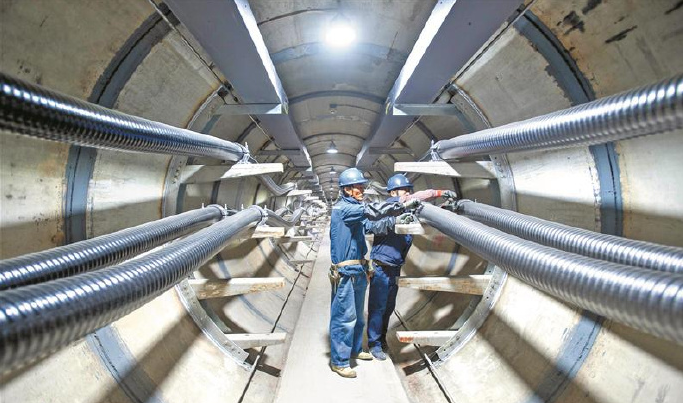
1. Mechanical damage to cables: During installation, cables are highly susceptible to mechanical damage due to construction negligence. During power cable laying, excessive pulling force or friction caused by dragging the cable along the ground can damage the cable’s protective layer. Additionally, after installation is complete, direct external force applied while working near the cable can cause damage. Furthermore, harsh natural environments can also damage cables, leading to issues such as swelling of the internal insulation and cracking of the cable sheath.
2. Moisture Penetration and Insulation Deterioration: When cable sealing is inadequate, moisture can easily penetrate the insulation. Once moisture enters, the cable’s insulation resistance decreases, leakage current increases continuously, dielectric loss gradually rises, and thermal effects become increasingly severe. Under the combined influence of heat and electricity, the cable’s insulation properties change, significantly reducing its insulation strength and ultimately leading to insulation aging and failure. When the cable insulation medium ionizes, carbonization occurs in the insulation, and ozone generated in the air gaps corrodes the insulation, ultimately causing the cable to lose its insulating capability.
3. Overloading: Cables must not be operated under overload conditions, as both overcurrent and overvoltage can cause damage to the cable. Current generates heat; when current flows, the heat generated by dielectric losses, combined with the heat produced by the cable’s operation, causes the cable’s temperature to rise gradually over time, especially with prolonged operation and increased load. In summer, when combined with high ambient temperatures, this often results in damage to the cable. Furthermore, when overvoltage occurs inside the cable, it can easily cause insulation breakdown.
4. Cable joint failures: Cable joints are the weakest links in cable lines, and failures caused by human error (such as poor workmanship) occur frequently. Examples include improper crimping and insufficient heating.
When a power cable is overloaded, the temperature of the conductors rises sharply; consequently, changes in the temperature of the conductors can be used as a basis for determining the location of a fault. By scanning the surface of power cables with an infrared thermal imager to capture images of the surface temperature distribution, and further processing these images to obtain numerical temperature distributions, it is possible to perform inverse calculations of the core wire temperature based on established heat transfer mathematical models, cable structural parameters, material properties, ambient temperature, and surface temperature. This enables non-contact fault detection of power cable core wire temperatures. Precisely because infrared technology does not require physical contact with the equipment, does not necessitate equipment shutdown, and offers advantages such as ease of operation, rapid detection, and high efficiency, infrared thermal imaging technology is bound to play an even greater role in future cable fault detection.
The safe and reliable operation of cables ensures the proper functioning of power supply and distribution systems. We must fully understand and master the principles of cable insulation aging and breakdown, the operating principles and performance of various testing instruments, as well as basic measurement methods, procedures, and principles—including the advantages and disadvantages of each method. At the same time, we should utilize Dingxin Smart Technology’s Distribution Network Cable Fault Locator and keenly grasp the principles, advantages, disadvantages, and applicable environments, and delve into their deeper implications. This enables us to promptly and accurately identify and locate fault points, thereby creating the conditions for implementing appropriate corrective measures and ensuring the continuity of power supply.