
The overhead power lines of the power grid stretch far and wide, supported by rows of steel towers. Spanning mountains and rivers and traversing both urban and rural areas, they carry out the critical mission of ensuring industrial and agricultural production and driving high-quality economic and social development. Today, the total length of China’s 110 kV and higher-voltage overhead transmission lines has long surpassed 2.2 million kilometers, making it the world’s largest and most extensive transmission network. However, this crisscrossing “power highway” is also subject to significant external disturbances due to its complex environment and human activities, the most common of which are physical damages caused by construction machinery—such as accidental collisions or unauthorized excavation within transmission line corridors.
(1) Typical Scenarios and Hazards of External Breakage
1. Mechanical Construction
Amid the infrastructure boom, it is impossible to completely prevent large machinery—such as cranes, excavators, tower cranes, and dump trucks—from operating illegally within power line protection zones. Incidents caused by machinery accidentally brushing against power lines, colliding with utility poles, or severing cables with excavator buckets can often trigger line short circuits and circuit breaker trips within seconds, leading to tilting or collapse of utility poles and resulting in massive losses. Shanghai Metro Line 11 once experienced a forced stoppage due to power supply equipment failure and train damage caused by external tower crane construction.
2. Forest vegetation
Power transmission lines in mountainous and remote rural areas are constantly threatened by tall vegetation such as trees and bamboo groves. If trees grow too tall or are blown down by strong winds, the safety clearance between the vegetation and the overhead power lines can easily become insufficient, leading to electrical arcing and phase-to-phase short circuits. Another point that is often overlooked is that areas with dense vegetation also tend to have an abundance of dead branches and weeds, making them highly prone to fires.
3. Wildfire Risks
During seasons characterized by clear, dry, and windy weather, as well as during Qingming Festival memorial services and instances of unauthorized outdoor fires, wildfires frequently break out near power lines. Particularly in areas with high forest coverage, large fires can quickly threaten multiple transmission lines, contaminating insulation, burning through cables, and disrupting normal power supply to the region.
4. Other potential risks
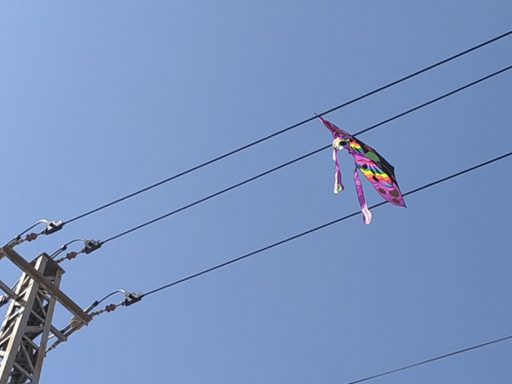
In addition to the core hazards mentioned above, scattered hazards such as electric shocks from fishing in the vicinity, conductors becoming entangled with floating debris, accidental trespassing, and theft of tower materials are also common, all of which can lead to line failures and equipment damage.
II. Breaking Through with Smart Solutions: Building a Comprehensive, Round-the-Clock Defense Network
Currently, the integration of renewable energy sources into the grid has further complicated the task of ensuring the safety and security of transmission lines. In response to the serious challenge posed by external damage to transmission lines, Dingxin Smart Technology—with years of expertise in the field of intelligent power monitoring—has launched a series of online monitoring and fault diagnosis products designed for transmission, distribution, substation, and cable systems.
In particular, the DX-WPS100-JGPower Transmission Line External Damage Prevention System (Precision Early Warning Device for Power Transmission Line External Damage Prevention) leverages technologies such as laser detection, audible and visual alerts, multi-camera collaborative visualization, AI-powered recognition, real-time intervention, and wireless communication to effectively prevent external damage to power transmission lines.
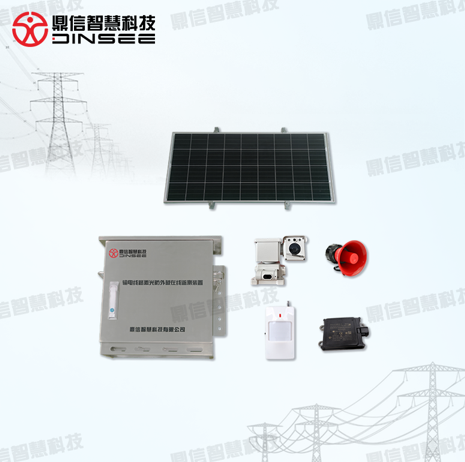
Each system is equipped with an independent Class 1 semiconductor laser rangefinder, which is completely harmless to the human eye. Centered on line equipment, the system performs real-time laser scanning over an extensive area. The moment a target enters the warning zone, it immediately triggers audible and visual alarms. The video surveillance unit overcomes the limitations of traditional single-camera monitoring by adopting a multi-camera integrated design. High-magnification zoom lenses work in concert to focus on details while covering the entire scene, providing a comprehensive view of the area’s dynamics. Equipped with a front-end AI edge computing module and built-in, deeply optimized intelligent analysis algorithms, the system rapidly processes data, identifies targets, and issues alerts. Its core recognition capabilities comprehensively address external damage risks to power transmission lines. It intelligently identifies the intrusion of various construction machinery and engineering vehicles, such as cranes, trailers, dump trucks, excavators, and tower cranes, automatically highlighting targets with red boxes on the screen and displaying alarm annotations. With an identification accuracy rate of ≥95%, it covers all potential hazards, including prevention of fishing-related electric shocks, fires near power lines, and floating objects entangled in wires. The algorithm automatically filters out interference, resulting in a low false alarm rate. Alarm information is transmitted via 4G, Wi-Fi, and other communication methods to monitoring software on linked mobile devices and computer platforms. Line management personnel can view real-time conditions within the line protection zone and issue real-time voice alerts from the monitoring center to stop dangerous operations on-site.