
Power Cable Fault Location and Monitoring Device: Multi-End Live Detection of Cable Defects Has Been Implemented
Why are faults in hybrid circuits always so numerous and difficult to troubleshoot?
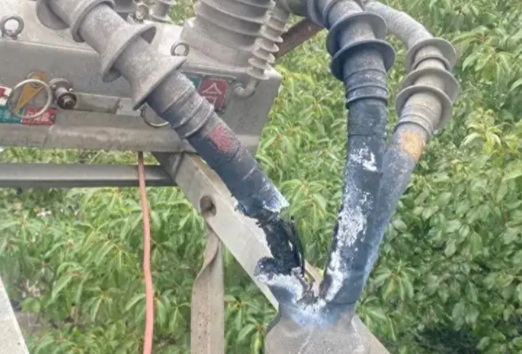
Mixed overhead and underground cable lines have long been a persistent challenge in power grid operation and maintenance. With half the line running overhead and half buried underground, these lines are characterized by complex topography, erratic routes, and scattered locations. Many people wonder why the failure rate of such lines is significantly higher than that of ordinary single-type lines. The reason is actually quite simple: they combine all the drawbacks of both overhead lines and underground cables, are highly susceptible to weather, environmental, and human factors, and present numerous and varied potential failure risks.
Overhead power lines installed outdoors are particularly vulnerable to severe weather; strong winds, thunderstorms, snow accumulation, and ice buildup can all cause the lines to sway, lead to lightning-induced flashovers, and damage the outer sheath—all of which frequently trigger circuit trips. Meanwhile, underground cables are constantly exposed to a damp, enclosed environment, making them prone to hidden issues such as insulation aging, moisture penetration, and grounding abnormalities. Compounded by external disturbances such as excavation at construction sites, vehicle碾压, human vandalism, and contact with debris, these lines can fail at any time. What’s even more troubling is that most of these internal hazards are invisible to the naked eye and cannot be fully detected through manual inspections. Minor issues can escalate into major failures, not only disrupting power supply but also significantly increasing the pressure and costs associated with emergency repairs.
Traditional inspections aren't keeping up—is there a better solution?
The old methods of manual patrols and emergency repairs after the fact are no longer suitable for today’s complex hybrid power grids. Manual inspections have blind spots and significant delays; they can only address faults that have already become apparent and are completely incapable of predicting potential hazards in advance. So how exactly can we reduce the cable failure rate and minimize sudden power outages at their root cause? Dingxin Smart Technology’s DX-WPS100-GZ02Power Cable Fault Location and Monitoring Device is specifically designed to address the monitoring challenges of hybrid lines, providing an intelligent solution that combines proactive early warning with precise post-event location.
With automatic monitoring of line status throughout the entire process, isn't this something you should have?
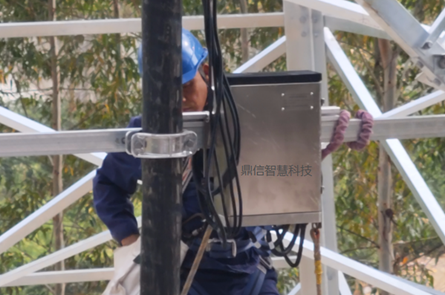
It’s worth it! The entire system features a simple structure and high practicality, consisting primarily of three components: on-site monitoring terminals, a fault data analysis master station, and a user operation platform. The equipment is distributed across key locations, such as cable joints, supports live installation, and provides 24-hour online monitoring. As soon as an abnormality occurs on the line, the terminal immediately detects traveling wave signals and latent current signals, automatically performing calculations, storing data, and uploading it. The master station utilizes a distributed traveling-wave algorithm based on network topology to intelligently analyze data, precisely pinpoint the fault section and location, and automatically identify the fault type—eliminating the need for operations and maintenance personnel to conduct blind line inspections.
Solves all kinds of O&M challenges!
The advantages of the power cable fault location and monitoring system are perfectly aligned with on-site needs. First, it provides precise fault distance measurement and type analysis. When a fault occurs, it can quickly pinpoint the fault location, record complete waveform data, and accurately determine the cause of the fault, providing a reliable basis for line maintenance and the review of potential hazards. Second, the system provides early warning of potential hazards. It can detect faint traveling-wave signals indicating hidden issues along the line, enabling early identification of potential problems such as insulation degradation and line abnormalities. This facilitates proactive maintenance and prevents sudden tripping incidents at their source.
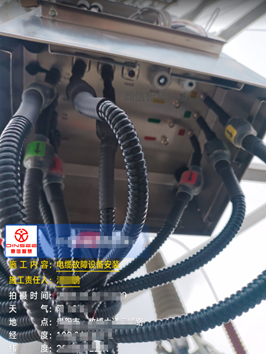
At the same time, the device features a built-in intelligent self-diagnostic function that periodically monitors its operational status; it automatically triggers an alarm in the event of a malfunction and resets itself in the event of a system freeze, ensuring long-term, stable operation. The terminal also collects key information in real time—such as power supply mode, battery status, temperature, and signal strength—enabling operations and maintenance personnel to monitor the device’s operational conditions. The system employs a distributed installation approach, effectively addressing the issue of signal attenuation over long distances. Combined with dual-end ranging, dynamic wave velocity adaptation, and high-precision GPS synchronized sampling technology, it significantly improves positioning accuracy.
With multi-channel data acquisition, monitoring capabilities have been comprehensively upgraded!
The device employs a single-host, multi-channel architecture with exceptionally robust data acquisition capabilities. It can simultaneously capture multiple high- and low-frequency signals, covering key monitoring data such as current, voltage, and ground loop current, thereby providing ample data support for precise fault analysis. All fault and early-warning information can be pushed directly to mobile devices and web clients, allowing operations and maintenance personnel to view detailed data anytime, anywhere, which significantly reduces the time required for troubleshooting and emergency repairs.
Overall, this system has completely transformed the traditional approach to hybrid lines—where “faults were addressed by waiting and troubleshooting required on-site visits”—by enabling early warning of potential hazards, precise fault localization, and full traceability of data throughout the process. It has effectively reduced the line failure rate and significantly improved the stability of power supply for hybrid lines as well as the level of intelligence in their operation and maintenance.