
Have you noticed that the longer the line and the denser the network, the higher the operational risks associated with overhead transmission lines?
This is because ultra-long-distance transmission lines traverse mountains and valleys, passing through complex terrain such as forests and river valleys, where they are constantly exposed to strong winds, ice accumulation, thunderstorms, tree obstructions, and mountainous environments. As a result, they are highly susceptible to issues such as high-resistance ground faults, instantaneous short circuits, line flashovers, and hidden transient faults. The most distinctive characteristics of these faults are that they are hidden, sudden, and produce weak signals; in particular, high-resistance faults leave no obvious traces and exhibit rapid attenuation of traveling-wave signals.
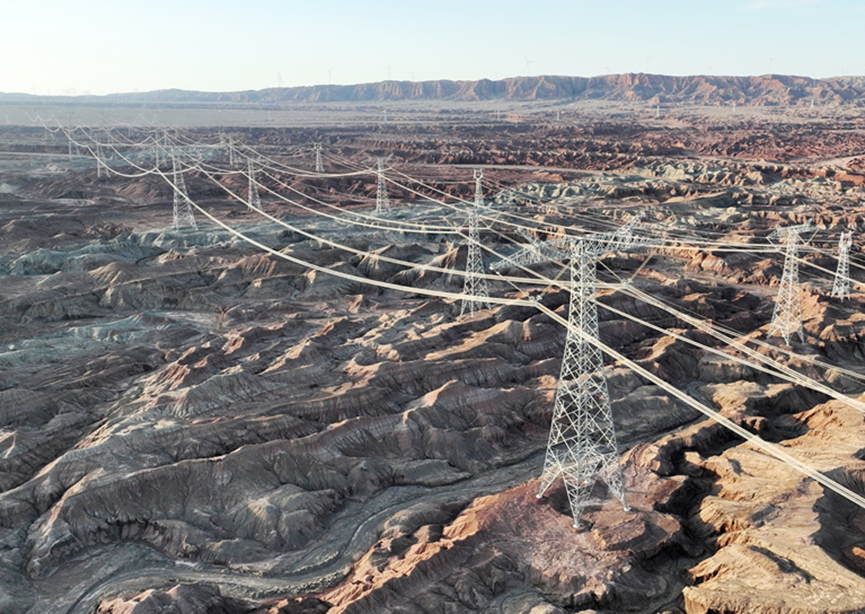
Line faults are difficult to troubleshoot, hidden faults are hard to detect, and high-resistance faults are hard to measure accurately—so how can this be resolved? Dingxin Smart Technology’s DX-WPS100-GZ01/FJnon-contact traveling-wave distance measurement device offers a brand-new solution for fault diagnosis in long-line networks. The system primarily consists of three components: a monitoring unit (terminal), a central station, and a user system, making it a true “intelligent fault detective” for inter-regional transmission lines.
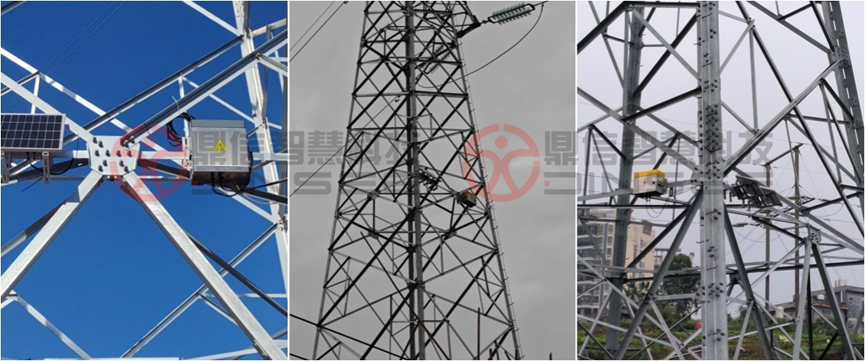
The standout feature of the non-contact traveling-wave distance measurement device is its ability to collect traveling-wave signals from power lines without physical contact. The equipment is mounted on transmission towers and must remain in no contact with high-voltage components, eliminating the need for power outages during installation, commissioning, and maintenance. It is suitable for high-level power supply scenarios such as long-distance backbone lines and feeders from smart substations, causing no impact or burden on the operation of primary equipment and minimizing the various risks that retrofitting work poses to the operation of the main power grid; The device has a monitoring range of at least 30 kilometers and does not need to be installed at every pole or tower. The backend software enables data preprocessing, fault analysis, result output, and equipment management.
By employing a distributed layout combined with a proprietary distance-measuring algorithm, the non-contact traveling-wave distance-measuring device specifically addresses industry challenges such as signal attenuation in long-distance lines and the difficulty of monitoring high-impedance ground faults. It can capture transient traveling-wave signals from the line without distortion and eliminate interference from secondary circuits, ensuring that even extremely faint latent faults or transient flashover faults are accurately detected without any false negatives.
Leveraging Beidou/GPS precision timing and synchronized sampling technology, the device significantly reduces sampling errors. Combined with an adaptive wave velocity algorithm and a multi-point redundant distance measurement mechanism, it can accurately pinpoint the fault section and distance—whether for conventional faults or complex high-impedance ground faults—with a distance measurement accuracy far surpassing that of traditional equipment.
In addition to precise location tracking, it also features big data analysis capabilities for faults. It can track the frequency of transient faults and identify sections affected by lightning strikes over the long term, enabling precise analysis of vulnerable points along the line. This provides reliable data support for lightning protection upgrades and targeted remediation of potential hazards, truly enabling early warning of faults and proactive mitigation of risks—rather than waiting for circuit breakers to trip and power outages to occur before taking corrective action. In the long term, it will also be capable of autonomously identifying and assessing faults.
It comes fully equipped with intelligent operation and maintenance features, including scheduled self-tests and automatic recovery from anomalies, eliminating the need for manual on-site intervention. It supports remote parameter tuning and software updates, allowing equipment maintenance to be completed without leaving home, which significantly reduces field operation and maintenance costs.
After a fault occurs, the results output module of the non-contact traveling-wave distance measurement system provides two channels for alarm notifications: First, it visually displays the complete fault diagnosis results via a web page, allowing operations and maintenance personnel to view the full fault report and waveform data by logging into the system; on the other hand, it automatically sends SMS alerts to the mobile phones of relevant O&M personnel, ensuring that fault information reaches on-site crews immediately. This allows repair teams to avoid blind, wide-area line inspections; instead, they can use the location data to proceed directly to the faulty section for resolution, effectively reducing the time required for fault repair.
Given the ongoing expansion of the power grid and the increasing workload associated with transmission line operation and maintenance each year, the strategic installation of non-contact traveling-wave distance measurement devices on utility poles can significantly reduce the burden on front-line operation and maintenance personnel during field line inspections.