In modern power grid operations and maintenance, locating faults on transmission lines has always been a persistent challenge. Given the vast coverage and complex environments of these lines, traditional manual patrols are often time-consuming and labor-intensive, with questionable efficiency whenever a trip or ground fault occurs. Recently, we tested a solution that combines solar power with smart monitoring, and the results were immediate. Today, we’d like to discuss this “effective” method, in the hope that it will provide some inspiration to our peers.
In the past, we relied on fault indicators and manual inspections, but these methods were difficult to implement in remote areas such as mountainous regions and across rivers. Industry data shows that approximately 40% of the time spent troubleshooting power transmission line faults is devoted to “locating the fault point,” with 70% of these issues arising from a lack of on-site power, which prevents monitoring equipment from operating continuously. Traditional methods can often only pinpoint a general area rather than a precise location, which directly drives up maintenance costs.
The core challenges of power transmission line fault location lie in “unreliable power supply” and “unstable data transmission.” Many on-site monitoring devices, lacking a stable power source, either experience frequent power outages or must rely on low-power modes, which significantly compromises data collection accuracy. Therefore, integrating the “power supply” and “location” components is the key to breaking this deadlock. After multiple rounds of field testing, we identified a “practical” solution: a combined approach of “solar-powered self-sufficiency + intelligent fault diagnosis.” Specifically, we install solar power systems near transmission towers to continuously power equipment such as fault indicators and traveling-wave distance measurement devices, while simultaneously transmitting data in real time to the analysis platform via 4G/5G networks.
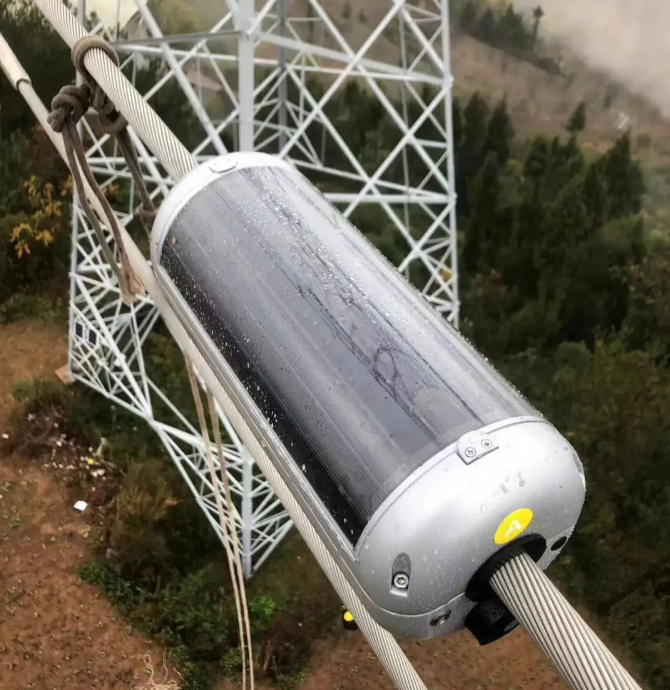
Our company provides a complete solar power supply system. This system includes solutions ranging from 30W to 10kW, fully capable of meeting the power requirements of on-site sensors and communication modules. The biggest challenge in locating power line faults is insufficient battery life during rainy weather; however, our system features optimized energy storage batteries and, in conjunction with our proprietary power controller, can precisely regulate charging and discharging to ensure stable operation even during prolonged periods of rain. Based on our field tests, emergency response times have been reduced from over 4 hours to within 1 hour, and data transmission integrity has improved by 85%.
With the advancement of the Internet of Things (IoT) and AI technologies, fault location on power transmission lines is shifting from a “reactive” approach to a “predictive” one. In the future, the industry will require lighter, more reliable power supply solutions, as well as smarter fault diagnosis algorithms. It is foreseeable that smart location systems integrated with solar power will become standard equipment in the intelligent transformation of power grids.
For operations and maintenance teams planning project upgrades, we recommend prioritizing the following three aspects: “reliable power supply, real-time data, and accurate algorithms.” Choosing a partner like Youdianda Technology—which offers end-to-end solutions “from solar panels to energy storage batteries to power controllers”—can significantly reduce system integration risks and ensure that fault diagnosis is truly “fast, accurate, and reliable.”